The White Moth
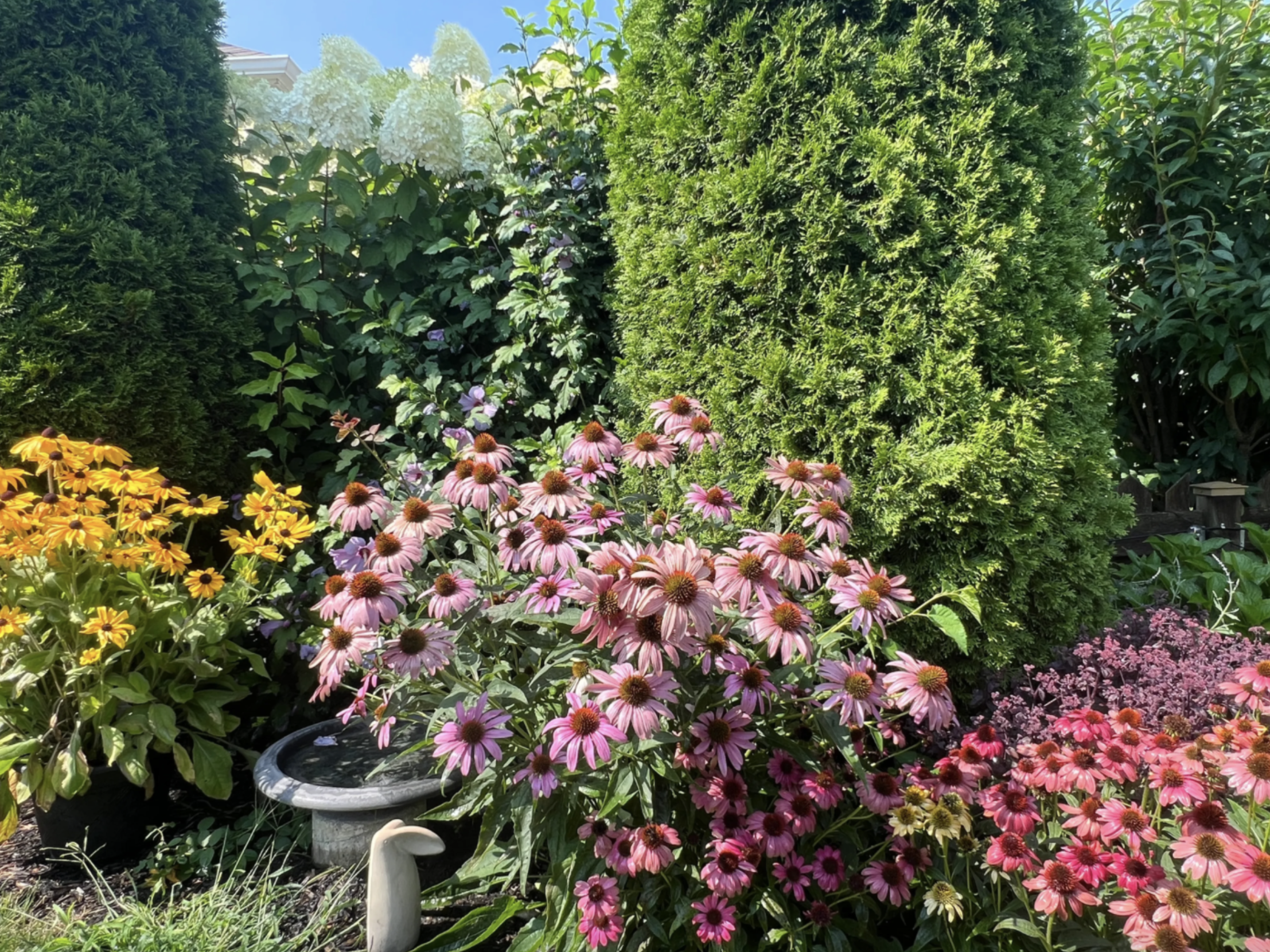
photo from my garden
It was a full moon this weekend. Some close friends had planned a late-night gathering by Lake Ontario, just a five-minute bike ride from our place. The plan was simple — sit by the fire, have a few drinks, and take in the Toronto skyline under the night sky.
I had wanted to go. It’s a beautiful spot, surprisingly private. My dad used to call it the Cape of Good Hope when we lived in the beachfront condos and walked there every weekend. Back then, my daughter was tiny — maybe three. Now she’s taller than me, a young woman in her teens. She had just come back from two weeks at a sleepaway camp north of Toronto, where the land seems to melt into little heavens, hugging beaches the color of lapis.
In the end, I decided to stay. I didn’t want to be even five minutes away from her. We ordered tacos and churros, stayed in, watched horror movies, and laughed.
Lately, I’ve been trying to weave in stories of my characters when they become parents. It happened without overthinking — in the first book, they fall in love with each other, and then what? My first book’s structure came naturally; I didn’t even think about the storyline. It was all downloaded from somewhere deep inside me in less than a month. I just wrote it, edited it, wrote again, edited again and again. Two years in making now. But the second one is different.
I wouldn’t call it a struggle — because honestly, I’m having fun. Dipping into the emotions of becoming a mother feels familiar, but exploring the other side — becoming a father — has been harder. And then there’s the thing holding the storyline: the complexity of a relationship with the one person in your life you’d do anything for — even die for. Not exactly easy to write.
This morning, after my usual reading time, I woke up fresh and full of energy — ready to tackle the Sunday chores with the extra loads of laundry after her camp. We then played tennis with my husband, swam with my close friend and even had ice cream. The afternoon was calm, the way I like it. I’m a social person, but somehow Sundays are the days I prefer to stay away from people. I want my garden, family, dog, music, to be in my corner of writing. I need to cool my mind and zoom in.
It’s a hot August this year. Not that I’m complaining, but I’ve had to water the garden twice. My roses, especially, aren’t doing well — it’s too hot for them. While watering, I noticed a bumblebee clinging to my white hydrangea. The spray of water pushed against him, yet he held on. I stepped closer, taking in the bloom’s white petals with pinkish shadows that I know will deepen by September. For some reason, I felt the urge to test the bee — to keep watering, to watch him to struggle and hold on. Then in the same frame of my garden, there it was, a white moth. It was pondering around my garden, elegantly, checking every corner, every flower, without landing, without settling down. I turned off the water and watched.
Later in the afternoon, I asked ChatGPT, “What’s special about a white moth?” One answer stood out: it’s a symbol of the soul and spirit of the ancestors, watching over the living. A white moth entering your home is said to mean the soul of a loved one is nearby.
I’m not sure yet where this will lead, but I have a feeling I’ve just found the key to the structure of my second book. I’m only a chain ring connecting generations of love.
The key is to ponder.
Unnecessary Emotions
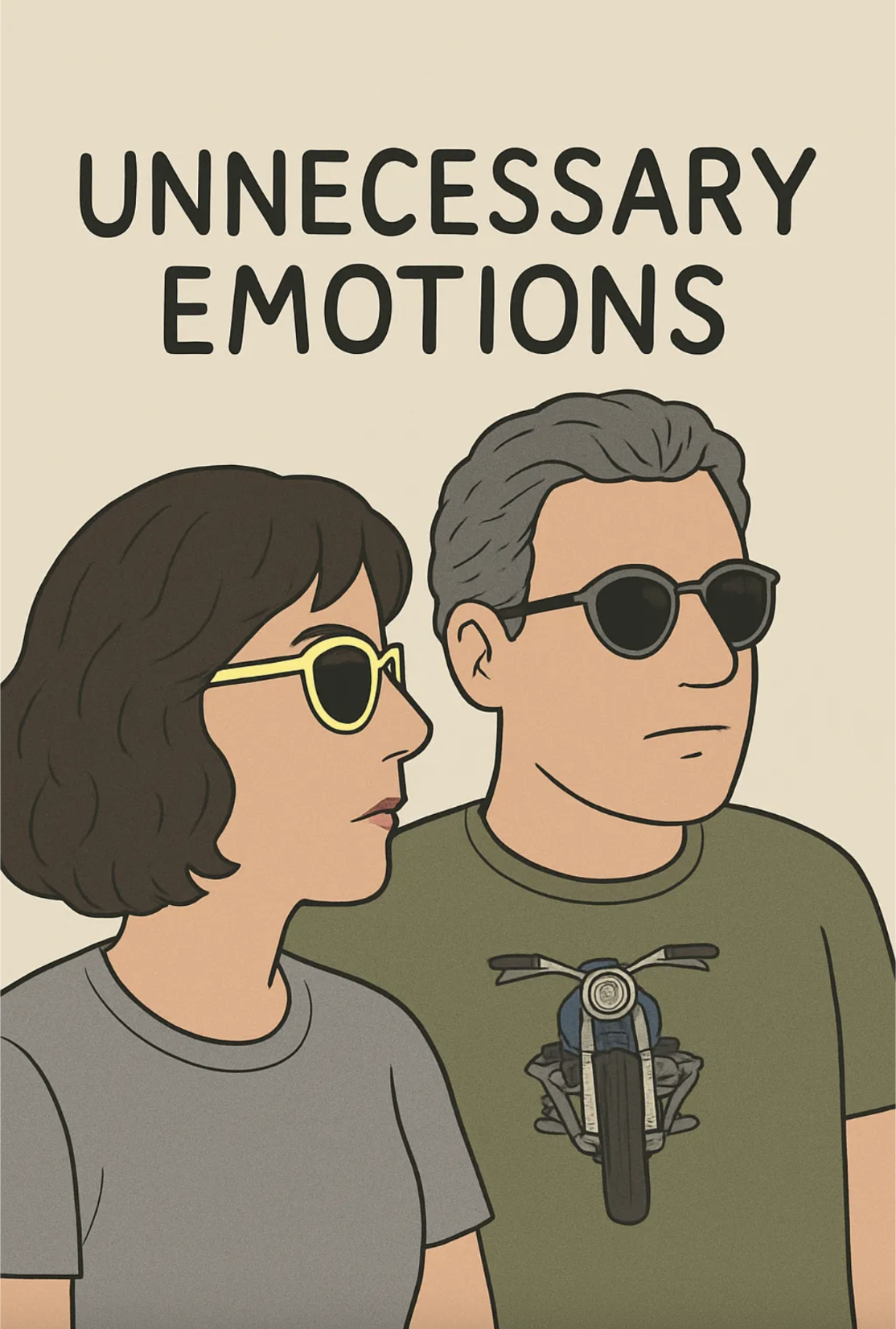
Image generated with IA from our personal photo.
The fact that I don’t remember anything from last night after we got home is disorienting.
The party was great. Both Guido and I were in a good mood even before our first drink. The crowd, the music, the ambiance — all five stars. After a martini, our host opened a bottle of red, and as the night warmed up with music, dancing, chatter, and laughter, I somehow finished the whole bottle just by myself. I remember us coming home after midnight, taking off my new black pants — the ones I bought from the boutique recently — and hanging them up with care. The rest is a blur.
In the morning, Guido is mostly on his phone. Something is going on between Mamma and Gaetano, and he needs to “fix things,” as he said grumpily when he woke up. I don’t ask questions when it comes to his family affairs; I prefer to stay away from the complications of their relationships. Not just with Guido — even with friends, I’d rather not know the details, the gossip, the who-said-what. When he talks to his mom, his tone sharpens. He picks on her more than anyone else, and I can feel the root of it is something deeper. He won’t admit that, but he always complains about the small things — how she gets on his nerves, asking too many details about his daily life.
What did you have for lunch? Did you exercise? Are you stressed? Who was at the party? Guido, are you drinking too much? Are you smoking weed? What did you cook today?
And then the commentaries — You’re feeding Sarah too much meat. You should make more vegetables.
He told me once that her attitude shifted after his ex-wife passed. She’s always worried about him. We are sitting in the backyard. The hydrangea has taken on the pink hue of fall, and the roses are blooming late this year. August was hot. I walk over to the rose I love most. Don Juan, that’s the name of the breed. Its scent is velvety, soft but rosy. Just the way it should be — not showy, not blunt. I cup it in my palm, tracing the petals as they spiral around the yellow center. It’s just another flower, but it’s mine. My rose.
When Guido hangs up, he exhales — pffff — a sharp sigh of frustration. He stretches his legs into the sun, curling and uncurling his toes in the wet grass. I know he needs a breather. I walk barefoot on the grass, soaking in this sparkling end-of-summer sun, not really in the mood to chat. He tosses the ball for Goebel a few times, then gets annoyed when the dog won’t drop it.
“Last night was fun.”
“It was.”
He pushes his sunglasses up onto his forehead and looks at me.
“I mean… not the party.”
I narrow my eyes, searching my mind. Did we make love last night?
“Hmm,” I say, dodging. I don’t remember a thing.
“You were so drunk.”
“I know, it was fun.”
I’m still trying to recover any trace of memory — what happened after I hung my pants in the closet?
I drag one of the white garden chairs over, set it beside him, and sit. He’s on his phone, probably scrolling cycling photographers’ posts. He’s obsessed with Tour de France shots. With the other hand, he gestures frustration.
“This is too much.”
Like most of the time when I have no clue what he’s talking about, I wait it out. The garden holds my attention. The cosmos I planted this year are taller than me now, dancing in the wind. Their bright pink against the blue sky is a reminder of how Toronto shines in September — like no other city.
“He talks about architecture as if buildings are emotional bodies, like they all need to mean something.”
Now I know the topic: architecture.
“Some are.”
“Agreed. But it kills me when architects talk about the concept of a tower or a condo or a shopping mall. Why does everything need to mean something? I get it, the space should be pleasant, but most importantly it should work.”
“So, what was too much?”
“This friend of mine from Spain. He posts his projects and pairs each sketch with a poem. Imagine — he’s designing a house for a client and starts with a haiku. Poor client. Just design the goddamn house, man!”
I’m about to mention buildings that do carry emotion — the ones I remember from Iran, Spain, Mexico — when he cuts me off.
“It’s like having a lover and just talking and talking and talking and never fucking.”
I smile. So typical of him.
“So now we’re talking sex?”
“No. I’m just saying, I don’t get the emotions that are… how can I say it… unnecessary.”
I laugh again. The phrase sticks: unnecessary emotions.
“Say, imagine we came home last night, you’re in this crazy mood of love, and I go, oh, lab-lab, lab-lab — and then fall asleep.”
I’m still trying to remember, even a fragment, some blurry scene from last night. Nothing. I don’t dare ask. He’d laugh at me forever. There’s no question I can ask that won’t give me away. So I stay quiet.
Then, like always in long relationships, he glances at me with that half-smile under his stubble.
“You remember, right?”
I bite my lower lip, nod no. He knows. We both laugh, louder, longer this time.
“Oh, fuck — there were zero unnecessary emotions last night,” he says, wiping his eyes, wet from laughing hard.
Hey, I’m Gracie. I’m working on my debut novella, Is the sun a he or a she? a romance.
Be a Good Person
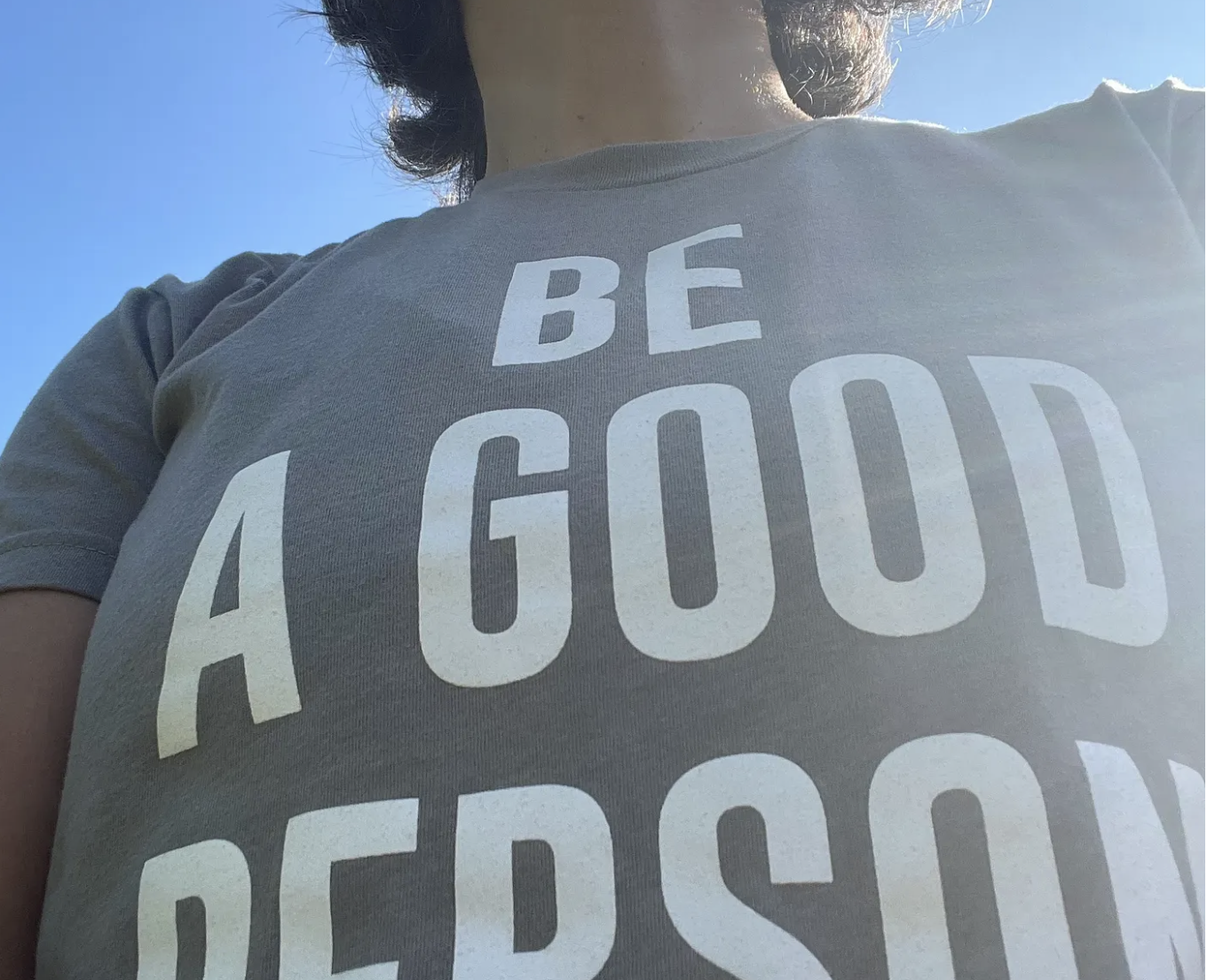
Be a good person T-shirt
I bought a T-shirt from a shop in Denver that read: Be a good person. The first time I wore it, as a joke, everyone asked if I was wearing it for them or for myself.
I’ve built my business from scratch. My partner — my husband — and I have been the only investors. I came to Canada about twelve years ago with limited access to capital, resources, or support. As a small business owner, I’ve been through a lot. One battle after another. Yet, with the support of a great team, we managed to take baby steps, hit our revenue targets, and build a solid reputation in the industry.
In the past six months, projects have increased — and with them, the daily pressure of delivering consistent quality. We still can’t afford senior staff, or better to say, the right staff to manage projects. So as partners, we’ve had to stay involved in the nitty-gritty.
Last month, I faced an unhappy client on a project that could have seriously damaged our reputation. The team tried to manage it, but with each submission came failures, repeated mistakes, and the struggle of working within a broken system and unclear workflow. When I finally dug into the details, I realized the root of the problem; Me.
I hadn’t communicated my expectations clearly at the start. I hadn’t told the team what quality meant to me, or what missing a deadline truly costs us. And yet, when they missed one, I got frustrated and became the angry boss — the kind everyone hates.
I had a meeting with the client today. I presented, and somehow managed to make them happy again. The company’s reputation survived, but mine took a hit. When I came home, I took off my work suit, opened the closet, unfolded the light brown T-shirt, and slipped it on. This time, I wasn’t telling anyone else.
I was telling myself: Be a good person.
Hey, I’m Gracie. I’m working on my debut novella, Is the sun a he or a she? a romance.

Ignorance
Toronto in snow.
In a casual Sunday afternoon late lunch with my family, overlooking Toronto’s frozen horizon beyond the lake, I realized I don’t know anything about what is going on in the world. As my sixteen-year-old daughter was talking with my husband about the news, I was looking back and forth between them, clueless. I am not aware of the news happening in the world, including the shooting at Brown University and Sydney. What does that really mean for me?
I have a small business, connected to the world for sure, so I need to know what is going on, specifically in Canada and the United States, so I read Economics, New Yorker, and sometimes world politics from the Guardian. I need to admit, from the time I have scheduled myself to write every night, I am not reading news a lot, maybe once a month, even less. I feel ashamed not to have the channels to know the news, but…
What gets me hooked is what can I truly do for the shooting at Brown, or Sydney, or anywhere in the world? Yes, I agree. I need to know, but can I do anything about it? And being honest, if I can’t, I don’t want to be distracted. I know it feels stupid, and if it was ten years ago someone told me they don’t read the news, I would start preaching about how our world is getting separated and how we are becoming numb citizens of the world. Am I becoming one of them? The many who don’t want to read the news or watch the videos released from the official TikTok of the White House!
Okay, let’s go back to basics.
Who am I?
A mom, a wife, a daughter, a sister, a business owner, a fiction writer in practice. This is as much as I can be. There are not enough hours in the day to try to be other things.
So, let’s think — who am I not?
I am not a politician. I am not an activist, although the years of living under the Islamic regime in Iran, I was thinking I am. The truth is, I am not. Other than tattooing my arm I didn’t do anything for the woman freedom social revolution in Iran. I don’t have the courage and selflessness. Am I a blogger? An influencer? I don’t think so. I like to have a positive impact on people’s lives, but that’s not my destiny.
If you ask me if I have empathy for people? I will pause to answer but, I think I do. I have been crying over childlren or adult getting killed or hurt in the world conflicts. But hear me out, deep insight, if I can’t do something about it, I prefer it stays out of my life. There is that much I can take and maybe that’s the problem, we are all so busy with our own shit.
I can’t just see and go, I need to do something about the things I feel are wrong. The reason I built my own business after working twenty years in corporate or artistically driven companies. My mind goes to making systems to fix the problem, and when it gets to world politics, it’s confusing and complex, and I can’t make anything from it, so I feel helpless. My defence mechanism; ignorance.
When we get home from the late lunch, I started reading the news. The twenty-one-year-old Mia at Brown University, who is a survivor of a previous shooting in 2019 and survived this shooting too, said wisely:
“Everyone always tells themselves it’ll never be me.”
This is so true in our world. War just for others, horror and killing not for me, just for others, suicide never for my family, death okay. This one we can’t ignore. People die, right? But then when the horror, war shows up at our door, we are surprised, because as modern, numb citizens of the world, where following the news every day seems like torture, we don’t really know what’s going on.
So, let’s go back to basics.
Should we follow the news or not?
In your wardrobe hang your brains.
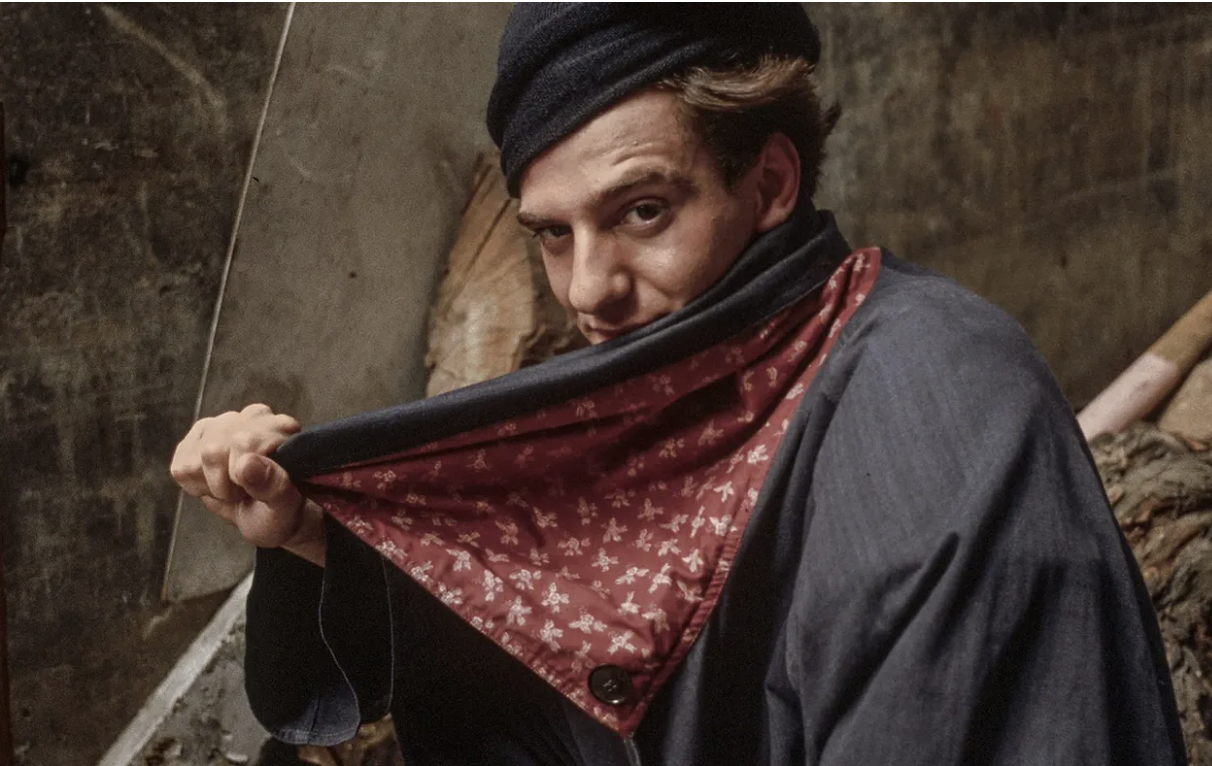
The image is from bbc website, John Galliano, an inspiring fashion icon.
Fall has always been a fashion refresh season for me — especially the time I spent in Europe and Iran. Those years shaped my sense of style and filled the pages of my fashion notebooks, which I kept separate from everything else. I would sketch ideas, think about the details, the colors, the shapes — how I wanted to express myself. It was never about what to buy, but about how to layer clothes, shoes, and accessories in a way that reflected who I was and what I represented within a group.
When I reached my twenties, there were many times I couldn’t find what I was searching for. I remember going with my mom to buy fabrics to make my own pieces. She understood my need to style and knew the limits of our family budget — and our access to “real” fashion. I wore my own creations, and over time, that became known as my style.
In Paris, I loved blending old fashion with new. My mom had a beige wool short-cut fall jacket that I used to wear with a flowery long skirt. With my wide-brimmed Parisian hat, I felt as if I had stepped back into the romantic era of Paris — the time when Hemingway, Cézanne, and Picasso sat in the same cafés where my friends and I would meet. I mixed skinny jeans with a bold red top reminiscent of the 1920s and paired them with Audrey Hepburn-style ballerina flats. There was always a story behind what I wore; my outfits revealed what was going on in my mind.
I wished I had been born a hundred years earlier — so I could have hung out with them.
Then I moved to North America, and my style became a reflection of daily life — comfortable, sporty, the busy mom look. There was no time to think about what I was expressing through my clothes. That layer of self-styling shut down for more than ten years. Other than rejecting the idea of being conventional, conservative, or boring, I didn’t think much about my style. Living in Toronto made it even harder — needing different clothes for each month of the year. Between the harsh winters, warm summers, and a few in-between months when you could actually care about how you looked instead of how warm you were, style naturally slipped to the bottom of my priorities.
Through a friend, who is also a medium member and a creative blog-writer, I got introduced to a pod cast from Bella Freud, Fashion Neurosis which is about fashion the way I want to think about it. I listened to most of the episodes. One sticked with me, where in the conversation with Kate Moss they talk about Bella’s dad’s poem about fashion. It finishes with this tag line.
“In your wardrobe, hang your brains.”
Since January 2024, I’ve been writing every day, mostly working on my novel. Writing about my characters made me think about their styles. As I move through different parts of the story and write my weekly blog posts on Medium, the layers of self-styling have started to return — not out of necessity, but as something naturally reborn. I’m thinking more, styling more, with the same belief I had in my youth: style is storytelling. It’s how we, as humans, communicate with each other.
My characters have helped me reshape how I want to carry myself — to become more me. Today, as I was folding laundry on Thanksgiving weekend in Canada, I felt thankful for my characters, Dina and Guido, who have helped me put my brain back into my wardrobe.
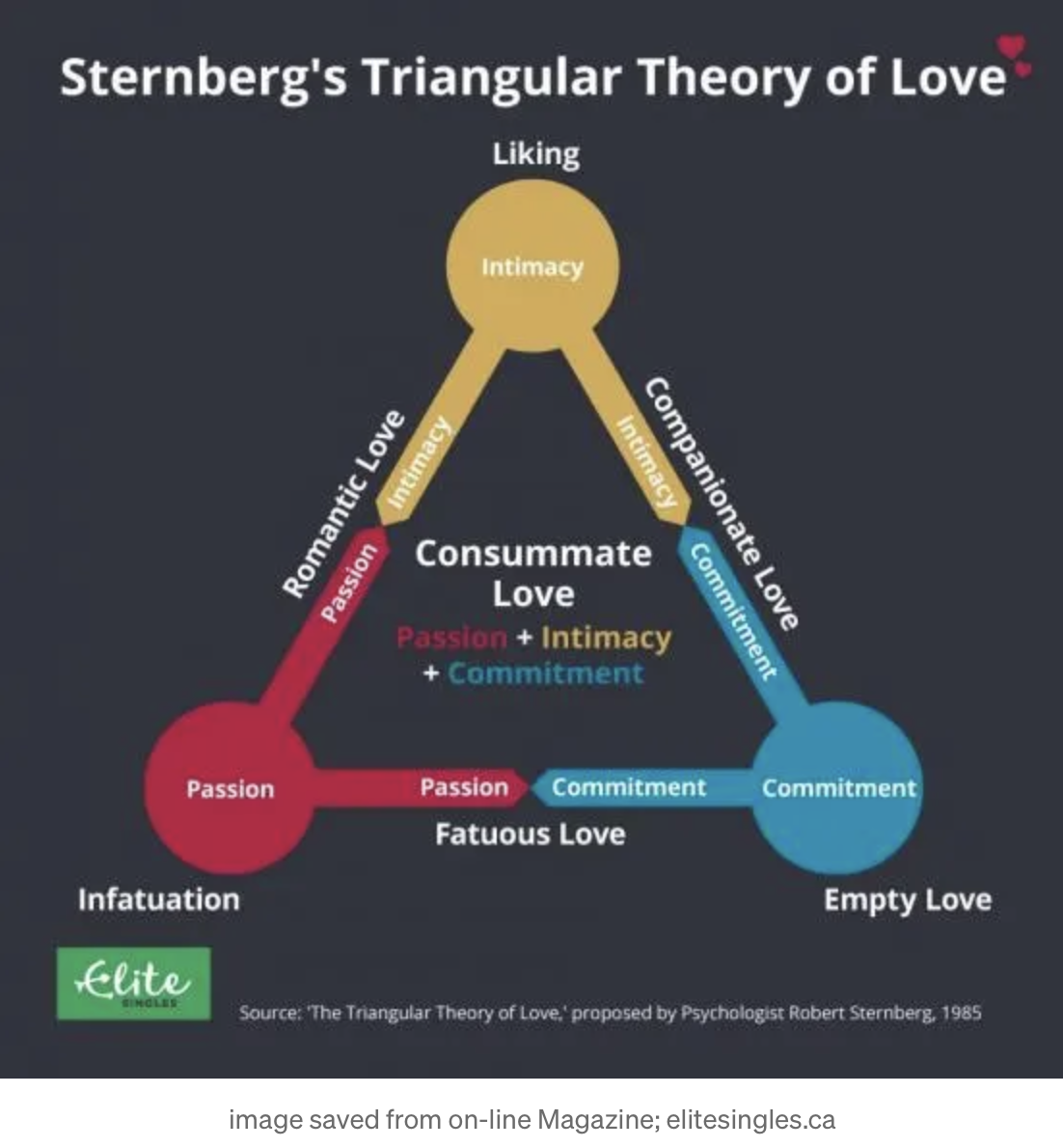
You Don’t Know What Love Is.
Triangular Theory of Love
Samar came last. We’d planned the gathering a week earlier, but she’d been operating in the morning and was tired by afternoon. She told me she needed to go for a run and then get a massage. She was my best friend in high school, and we’d reconnected in Toronto after years of losing touch.
For tonight, I’d invited the three musketeers, my high school friends from Tehran — to meet Guido. When we were lying in bed, I’d shared some of our memories with him. I tried to find photos of our awkward teenage faces with those long mandatory black scarves and the ugly dark-blue school uniform tunics, but couldn’t find any. Since he was eager to see what I looked like, I sketched it for him — the shitty teen Islamic Republic of Iran fashion! We laughed hard.
When I told him that all three now live in Toronto — one even in the same hospital — he was eager to have a social with them. We’d landed on a Friday night, but the day before, Guido came down with a fever. We had to go back to the hospital to check for any complications after his second surgery. He ended up staying overnight for IV antibiotics, and we came home in the morning. I suggested canceling, but he said he needed a distraction, so we kept the plan.
By the time Samar knocks on the door, we’ve already eaten — Yalda and I sitting around the dining table, Guido resting in the bedroom. He’s still not feeling well, and we’ve convinced him to lie down and not push himself to socialize. Samar settles in beside us after taking off her white scarf and chocolate-colored fall jacket, hanging them neatly in the entrance closet. She looks fresh; with light makeup around her hazy green eyes and a touch of pink on her cheeks, she looks pretty — like always.
Originally, we’d planned to have everyone’s families together, but since Yalda’s husband and Samar’s partner weren’t around, we turned it into a girls’ night. Since Guido showed up in my surgery room and stayed with me for recovery, I haven’t really had time with my friends — and none of them have met him. They’ve been pushing me to introduce my ex-lover.
She sits down as I serve her the beet appetizer.
“Where’s our boy?” she asks.
“He had a fever, resting.”
“Did you check him out?” She’s a doctor and knows the risks after surgery.
“Yes, he’s on meds.”
She starts telling us how the massage guy used so much oil that she kept imagining him slipping off her body and falling to the ground. We laugh. She’s always been the light of the party, brightening every room with her humor.
In school, I remember how we locked the door to our building to keep the teachers out of class and organized a speed-walk competition in the second-floor corridor. She and I were the managers. When the teachers finally broke in, we got into trouble and were suspended for a week. We were the two rebels — never with our headscarves properly on, the black cloth hanging loose around our necks like necklaces.
Funny enough, now we’re both doctors in the same hospital — and the only two in our group not settled into family life. Not married, no kids. She’s dating a German civil engineer, and I’m recovering from my divorce — as my friends joke, “in a relationship with my dog, Goebel.”
Yalda is having her dessert as Samar is serving herself the leftover stuffed pepper. I’m sipping my wine and thinking to check in with Guido.
“So?” Samar says as she puts the napkin on her knee. “Feedback please?” She is looking at Yalda.
“Approved instantly.”
Her eyes sparkles, looking back at me. “What was his name again?”
“Guido.”
“Really!? I had an ex with the same name. Super sexy guy.”
Yalda chimes in. “Then, I’ve to say all boys with this name are the same.”
“So, he is hot?”
I’m laughing at how we have grown, no one even talks about what is his job, where he lives, who is the family, we start with bedroom reputation.
“He’s super charming, libido to the roof.”
“Then no interview needed,” she says, taking a bite and chewing with pleasure. “Wow, this is yummy.”
I smile, proud. “He’s a good cook too.”
“So — angels on earth! Where did you say he lives?”
“New York.” She’d lived there for five years after her medical school.
She wipes her lips with a napkin, leaving a light pink trace on it. Then she looks me in the eye suspiciously and asks, “He’s not an architect, is he?”
Surprised, I reply, “Yes, he is.”
Her eyes widen. “Guido Pulla?!”
We stare at each other for a moment, and without needing to ask anything more, we both say at once, “Shit.”
I remember all the stories she’d told me about a man — a married man in New York — whom she’d dated for two years. She’d always said she was so hooked that the night he told her it had to end because his wife was pregnant and he’d decided to stay in the marriage, she walked for hours along the Brooklyn waterfront until she found herself in Brighton Beach at midnight. She never told me his name, his background, or his job — only that she had been madly in love with him. The same as with me, she knew my love of life as I called him, the one who I lost in my twenties and never could compare anyone with him, I never mentioned his name, his background, I never even told her how he looks like.
She covers her face with both hands, trying to hide her emotions, repeating one word over and over.
“Fuck. Fuck. Fuck!”
Yalda bursts out laughing, looking between us.
“What a triangle!”
I feel the same confusion I usually have at funerals — I can’t sort my emotions. I want to laugh like Yalda, but the image of Guido and Samar together, as lovers, burns somewhere deep inside me. A pain I can’t properly name.
When Samar finally lowers her hands, I see tears in her eyes, I’m not sure if because of laughing hard or she is actually crying. “Dina… shit. How did that happen?”
This time I laugh, and so does she. Then louder. Yalda joins in, until we’re laughing so hard we don’t hear the sound of crutches in the corridor — Guido walking toward us.
“What’s so funny?” he asks. He hasn’t seen Samar yet — her back is to him. When she turns, he stops. His injured leg swings slightly in front of the other. His salt-and-pepper hair is messy around his ears; it looks like we woke him with our laughter, and he walked straight into the living room without taming those wild waves.
He is stunned, looks at her, looks at me. Then he does what he’s best at — turning awkwardness into humor.
“Oh, bonsoir, madame!”
The rest of the night is a blur of high school memories, laughter, and Guido showing Samar, Sarah’s photos, talking about food and travel as if nothing has happened. We’re ignoring the elephant in the room — the fact that we, two best friends, have both had an emotional and physical relationship with the same man.
He lies in a full leg cast on my light grey sectional in front of both of us — the same way we once lay side by side all day in that small studio in Paris, listening to music, drinking wine, kissing each other’s lips. How were those days for Samar? Where did they make love? How forty-year-old Guido was different from his twenty-something version? I want to know, and I don’t. But one question pushes through, the one I can’t leave unsaid.
We go to bed late. When he lays his head on the pillow, I ask,
“Did you love her?”
He answers with a firm “No,” without thinking. Inside, I feel a flicker of pleasure — one I’m ashamed of. Then he narrows his eyes, watching the shadows of moonlight stretch across the ceiling.
“Exploring new people,” he says slowly, “is different from love.”
“Go on,” I say.
“When you talk about love, it’s not always about excitement, exploration, or adventure.”
“What is it about?”
He presses his lips together, taking his time. I’m cornering him, and we both know it — but I want him to speak. Once in my life, I want the love of my life to tell me what he really thinks about love. I can give him all the time in the universe, but I want the answer.
“…say, I love you, right?” He looks at me with that childish expression I adore. “That’s a feeling that connects with things — like, I truly care about you. But are you an exciting person for me? Not necessarily.”
“Was Samar exciting for you?”
“In that stage of my life, yes. I was bored, and my marriage was a mess. We’d shut down with each other two years after we married. So yes, she was exciting. But did I care about her? …not really.”
“So how do you start caring about someone — truly?”
“Oh, come on… you ask as if you don’t know what love is.”
I pause. I don’t have an answer — or maybe I do. Maybe it’s something I’ve learned only recently, in these last fifty-two days, since Guido’s ski accident. I agree with him that after the excitement fades, something else begins — a quieter kind of longing, a connection that goes beyond adventure or novelty, one that has nothing to do with anything but who you are together.
I say it quietly, mostly to myself. “Time, passion, intimacy.” He’s already closed his eyes. I don’t know how long ago. I kiss his eyelashes gently — the way I’ve done for more than twenty years.
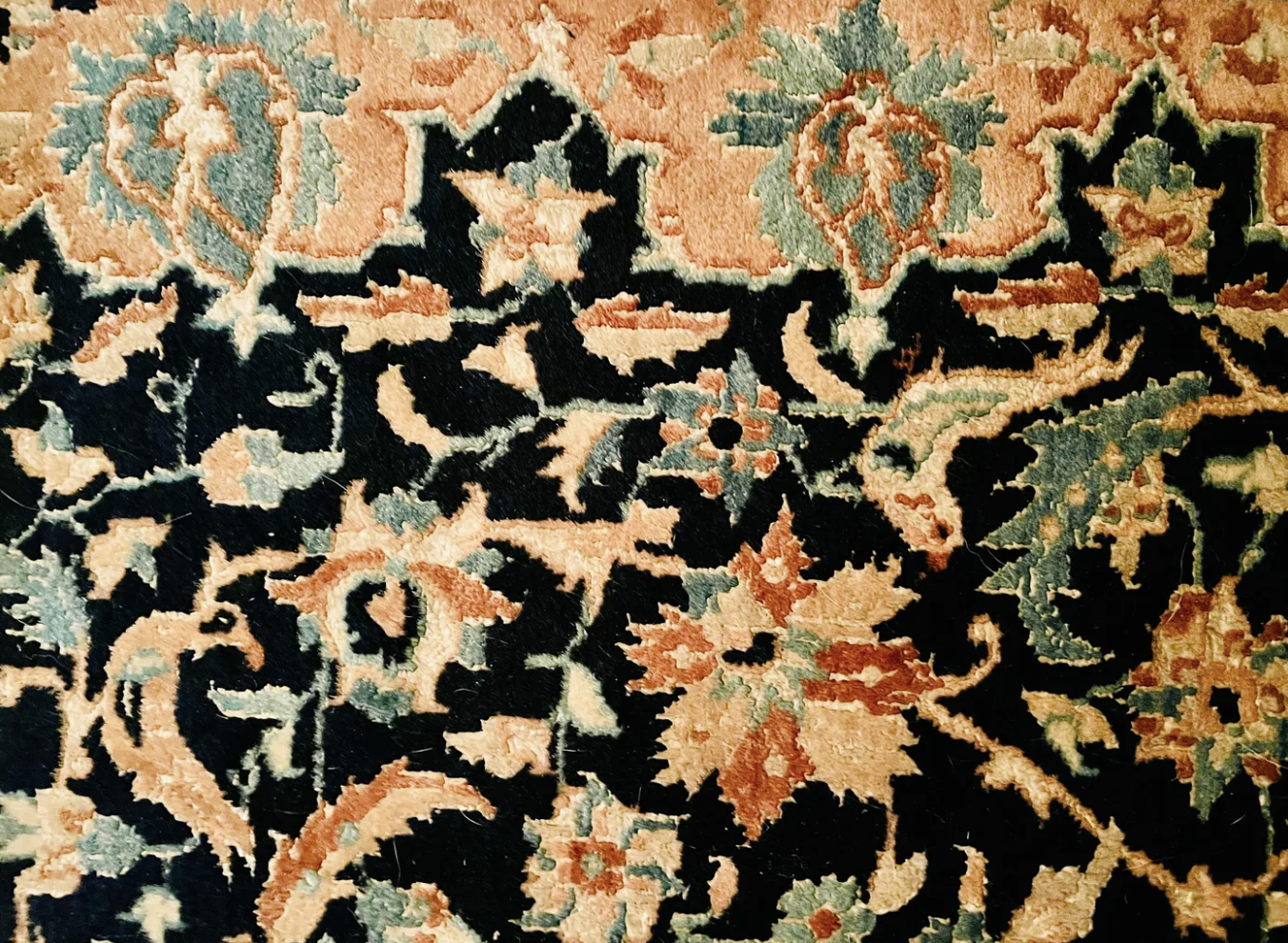
The silky, shiny parts
When I am stressed, I take warm showers. Sometimes more than three times a day. I feel the water cleans the thoughts of anxiety, stress, and all the things I want to get rid of. This time, it doesn’t work. The guilt stays, her body’s scent is under my skin. Sleeping with the mother of my child’s best friend, my best friend’s wife, a happily married woman, what the hell is wrong with me?
It all started about three years ago, on a ski trip together in Vermont. We got out of the chalet after dinner — me and her — to walk her dog. It was a cold night and a full moon. We hid our faces inside the large hoods of our bulky parkas. The sharp contrast of shadows on the snow-covered horizon looked like a Cézanne painting — sharp and vivid.
We had been socializing as families for five years by that time. The family had supported me in everything related — or not related — to Sarah: from school drop-offs and pick-ups to the days I needed childcare because of a social commitment, and even when I was sick myself, keeping her in their house until I recovered. Sandra, the mom would make me delicious soups and Shawn will bring them home with Sarah. They are my New York family.
When we got to a narrow pathway, she walked in front of me, off-leashing her dog to run on the packed path shadowed by the knee-height snow edge. I followed her, taking my leather gloves off to look for the weed I put in my pocket. I couldn’t find it and had to stop to check my pockets. When I found the lighter and the weed, I lit it and took the first drag. By then she was already climbing the pathway as it rose up the hill in front of us.
It was a rough time for me. I was considering quitting my job, but I knew I couldn’t do it. I was behind in my financials and my depths. I needed the salary. Life felt like a prison. On the weekends and in any trips when I could, I wanted to get high, like in my twenties, to be able to let go, to forget, to leave the realities behind and loosen up, even for a short time, like the intermission in a play.
She stopped and looked back at me as I inhaled the second hit of the weed. The sharp cold was breaking through my fingers. I took another hit in a rush to put my gloves back on and walked toward her. She was looking at the horizon, not at me. I followed her gaze. The valley was shining in the silver color of the moon. Sparkles of stars and snow were mirroring each other, as if they were both part of a harmonized carpet — one with a dark blue base, the other on a silvery blue.
It reminded me of the carpet Dina, my Persian ex-girlfriend, brought from Iran. It had sparkly silver dots in it, shining at night when we turned off the lights, making love. When I asked her what they the sparkly parts, she said that in some fancy Persian carpets, they use silk.
I looked at the sparkles in the snow, in the sky and remembered her. The weed and the seeds of the silky memory got to me fast. I stopped to control the emotions rising, but it was too late. I was already at the edge of an emotional meltdown, and remembering the old version of me, once in love, pushed me off the cliff. The darker blue and the lighter blue melted as my tears filled my eyes. I kept my distance from her and turned back, not to face her.
I didn’t realize she was already walking toward me — originally to take an inhale from my weed. When she reached me and put her hand on my shoulder to tell me to pass it to her, she saw that I was crying.
“What happened?”
I took a deep breath. I didn’t have any answers. She knew my mess; there was nothing new. It was just the fatigue. I held on to that idea.
“Nothing. I’m just tired.” I gave her the weed. She took an inhale and gave it back to me, watching me as I continued smoking. We kept the silence, letting the cold and view take us in. She was smart. She knew there was nothing to say, nothing that could take the pain away. What I didn’t expect was what she did. She took the leftover weed from me, finished it, dropped the butt on the snow, brought her face in front of mine, held my head in both her hands, and kissed me on the lips.
From that night, from the moment we held each other’s gaze for a long time, digging into one another under the moonlight, our breath turning into clouds in the cold and filling the space between our faces, we were never the same friends again.
The image of the blue-silver landscape and the sparkles on the snow has stayed with me through the years, but we have been acting normal in every situation, even when we were alone without Shawn and kids around — cooking together or having a glass of wine. Until last night.
It was a full moon again. Shit, I am becoming superstitious. Maybe I am aging, or I just want to think things in life mean something. It was the first minus two-digit night in December, cold and crisp same as that night in Vermont. Sarah wanted to have a sleepover with Oliver, Sandra’s daughter. I was hesitant — she never sleeps, and the day after I have to handle her crappy pre-teen mood.
It was a Friday night, and we had our holiday office party. I don’t like these parties, but I needed to show up and pretend I was having fun, talking to all the people I don’t want to see for one minute more than I have to during the day. By the time I arrived home, it was nine p.m., and Sarah was already in a bad mood. She had been expecting to get there two hours earlier. We had a heated conversation. I reminded her that I am a single parent and there is only so much I can shuffle.
Their place is ten-minute walk from us in the East Village. We walk in silence beside each other as I carry her backpack and she carries her pillow. Sandra opens the door, in grey sweatpants and a sweatshirt, matching with our daughters. I give Sarah’s backpack to her and get ready to head home.
“Do you want to come in? Shawn is not home. I was having a glass of wine.”
“Nah… tired. Had some at the office party. Better to hit the bed earlier.”
“You want to go to bed at 9:30 on a Friday night?” She laughed at me and made a pp-ff sound. I got offended. Actually, I felt stupid. Me, the party animal, the fun guy — she had a point.
“Ok, one more doesn’t hurt.”
She went in, me following her to the living room where she had already opened the bottle, the gas fireplace on with the artificial fire. I’m not a big fan of gas fireplaces. Fire is fire — no mimicking serious stuff, that’s my rule. She poured me a glass, and I settled into her sofa. The music was playing, her dog wagging his tail around me. It was the soundtrack of The Deer Huntermovie, one of my favorites. We talked about De Niro’s brilliant performance in that movie, at least that part I remember. The rest of the conversation after she opened the second bottle is a blur. I was already drunk when I came to her place, and by the fourth glass of wine, I sank into the sofa, staring at the fake fire.
The morning I woke up feeling a wet touch on my hand. It was her dog, I was in her bedroom, only in my underwear, under a fluffy white blanket. I freaked out. What the hell happened last night. I got dressed fast, put on back my watch which was on the night stand beside the bed and opened the door of the bedroom slightly to see if any of our girls are around. The kitchen was empty. I came out and saw her sitting on the same spot she was sitting last night, a large cup of coffee in her hands, steaming. She glanced at me. I stole my gaze and walked to the entrance to get my winter jacket. I didn’t want to make any impression that me sleeping in her bed was Ok, whatever happened needed to be washed out from our memories.
She didn’t stand up, we didn’t say a word.
At 2:30 p.m. it started snowing. Our street is getting whiter every minute. I want to text her to see when Sarah will be home, but I hesitate. Instead, I shower again. It’s the third time. What the hell should I do? I feel ashamed, mostly for the friendship I have with Shawn. He is my best friend in town. This can’t be happening. Sleeping with his wife while he is traveling — this is an asshole job.
Then I remember Issa and the mess with him and my father, both in love with my mother. The problem is that I am not in love with Sandra — not at all. I am just vulnerable when it comes to emotional stuff. It’s been a while, and I don’t have the muscle memory anymore. She is the only one who has emotionally connected with me. The rest of my relationships is just sex.
But what happened last night? I don’t remember anything. Not even a scene.
I look at my phone again, it’s 2:45. I check my last text messages. One is from her. It reads: Don’t forget the fucking pillow! I click on the text and try to type something, but I don’t know what to say. Should I say thank you? Should I apologize? No. That’s the worst thing I can do. I can’t even make a joke. My sense of humour is dried up. There is nothing to joke about. I feel I need to vanish, to melt like the snow and go underground. I try to make it easier — maybe I should just ask if I should pick Sarah up? But no, I prefer not to see her again today. Should I just stay quiet? That feels stupid too.
I put my phone on the kitchen counter and start cleaning, keeping busy so I don’t think about last night. I put the scattered dishes and glasses in the dishwasher, then go to Sarah’s bedroom and find four plates — one on her bed, two under the bed, and one on the nightstand with leftover food. I take them to the kitchen sink, turn on the water, and start to rinse them.
My phone screen turns on, there is a new message showing on my screen. It’s from her. I wipe my hands with the kitchen towel and touch the screen the way I would touch something soft, like the silky, shiny parts of that Persian carpet, rubbing my finger to reveal it. The text reads:
“Guido, I put you in bed. Nothing happened.”
It’s 3:03 p.m. I sigh with relief.
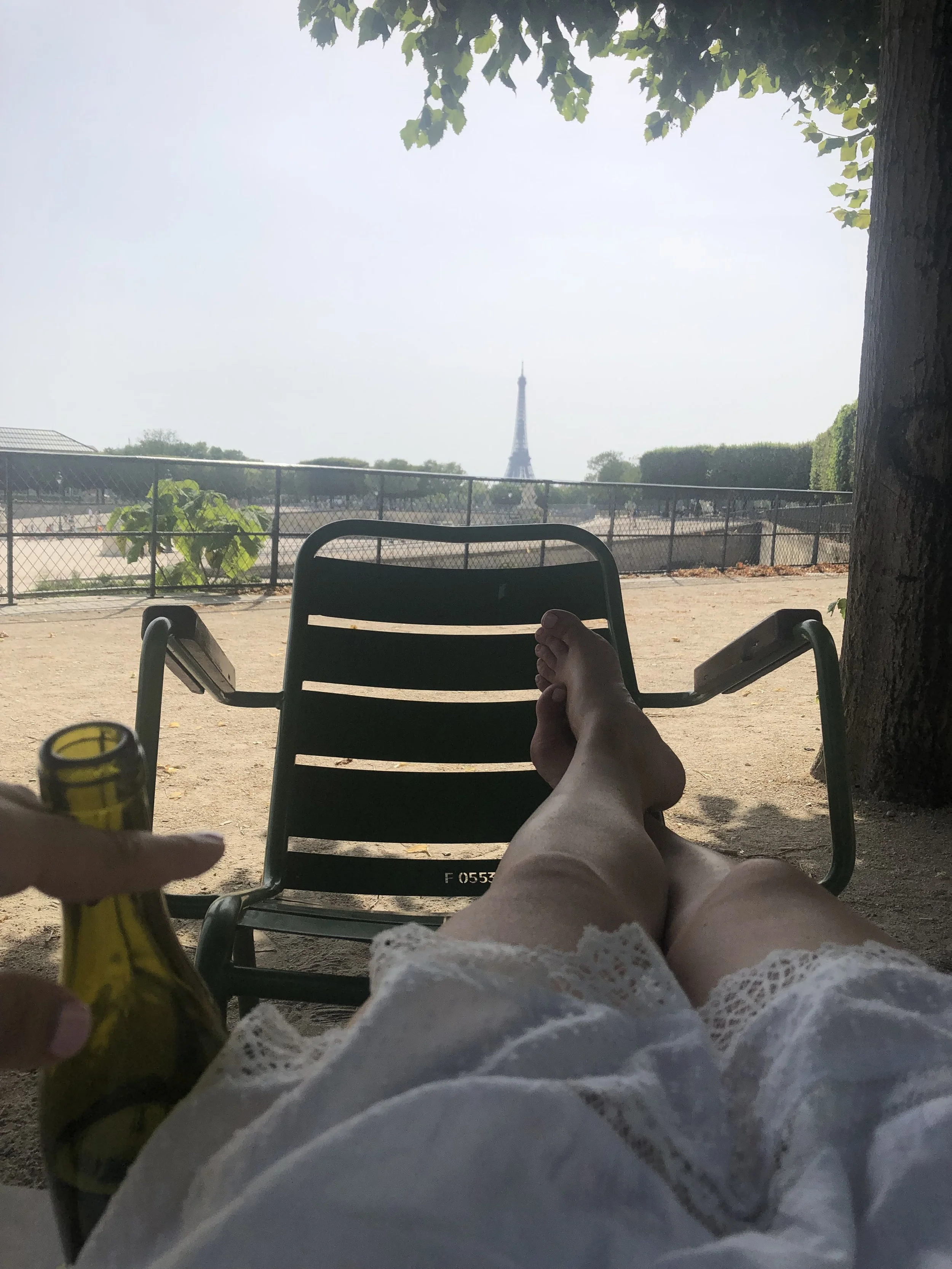
553
Paris in July
553 is the number of almost… not the beginning, not the ending, the moment just before things change.
If you are not a medium writer, read here.
It’s a hot Sunday noon in Paris, those July days when breathing becomes difficult, and the only places to take refuge from the humidity and heat are Paris parks, beside water fountains, under the shadow of trees. Like many studios in Paris, we don’t have any option for air conditioning. We use a small mechanical fan Guido puts on the kitchen counter. From the morning, when I head out, I don’t want to go back home. The heat is only part of it. His godfather, Issa, is visiting. I know their relationship is complex, and I want to give them space. For reasons unknown to myself, I don’t want to know details about his family. I feel our relationship is fragile, like spring days. I want to enjoy it while it lasts and not get deeper into his backstories.
I stop in a small shop to buy a snack and a beer, a late lunch. After wandering around Musée d’Orsay, I walk toward the Tuileries and find a quiet space. Originally, I came out of the studio planning to see some art, but when I saw the long lineups of people waiting in the direct sun, I passed. I wanted to walk, get lost in the city. In my white Lasse short skirt and my loose striped red-and-white top, I look like a promeneuse. Paris is the best place to do that, to ponder between the alleys and wander between predictable and unknown.
I end up under the shadow of a large maple tree. No one is around, only two chairs, exactly what I need. Dropping my tote bag and holding the beer in my hand, I sit on one of the green steel chairs and pull the other chair in front of me to stretch my legs. I take off my flip-flops and braid my legs on the other chair. In the hazy landscape before me, if I follow the line of my straight leg past the park with the manicured hedge of trees on both sides, I can see the Eiffel Tower.
As I sip my beer, my mind goes back to six months ago. I can’t believe it’s only months that we’ve been living together. It feels like years, as if he was always in my life. I take another sip and try to remember the before, and the after. I could pin a few days when I was happy before him, but nearly all the joyful moments of my life leak back to him. How did that happen?
I’ve always had this observation about one of my friends. When she dates, she transforms. Her personality changes into a blurred version of herself, not vivid anymore. Recently, she started dating a boring guy, so she has become boring. Watching TV at 7 p.m., going to bed at 9, even on weekends. With Guido, it’s quite the opposite. But am I blurring too?
The cold beer runs through my chest like a breeze on a beach. I notice a number on the chair beside my stretched leg, F0553. I smile. Paris numbers its chairs? Of course it does. My mind drifts to when I wrote Iran national exam, the famous Konkoor, when the whole country takes one exam on the same day to enter university. It was a stressful day. I remember my mom was more stressed than me. I went mountain climbing the day before, and later she was surprised to find out. In the exam, I became the 53rd to enter medical university. It was the same number. Funny.
Then, another one, our studio rent, 553 euros. His franc-to-euro confusion almost cost us the place. He was close to signing a deal at 812 euros. I asked him to follow me to the washroom. As the owner waited for us, I whispered;
“Hon! France has changed to euro, and you’re still thinking in franc.”
He has the same floppy attitude over any money-related matter, and when I remind him, he gets pissed off. I know why. He has never felt the pressure, not until recently. I can see that from the contrast between what he buys for himself in Paris, thrifting clothes, cheap ten-euro black T-shirts, and then his fancy fashion pieces from his past life in Barcelona. Once, I checked the brand of his ankle boots and was shocked. 2,500-euro boots! I couldn’t help but check other nicer pieces he owned. They were the same. A blazer for 1,200, the khaki sweater 800, and of course his watch, an Omega. Not a surprise for the son of the former Spanish government ambassador. He never had to think about money, a sharp contrast to me and my upbringing.
I check my cell phone. A large number screams, 5:53. Am I drunk or what?
I call our landline. It rings five times.
“Allô?” It’s not him. It’s a woman with a French accent. My heart drops. I sit up, trying to gather myself.
In French, I ask, “Je peux parler à Guido?”
She replies fast, “Bien sûr, un moment s’il vous plaît.”
Heat rises in my cheeks. Just one day I take off, and a sexy voice is picking up our phone?
It takes more time to have him on the call, and it gets worse when he picks up.
“Hey, sorry, I was showering.”
I’m speechless. I wanted to share the funny story of the numbers, the chair, my Konkoor, the clock, but I lost my words. Instead, I say that I wanted to go to a gallery, but it was busy, and I may go see a show and I will be home late tonight. He replies with a simple, “…mm. Sure. See you then.”
We hang up. I can’t decide if I should be mad or angry or nothing at all. Cultural differences, DAA! Of course we have that, me from the Middle East, him from Europe, a combo that I can’t even remember all the countries he has in his blood. But this, one day me out of the home and another woman is picking our phone, this is out of the zone.
I finish my beer in a glop, put the snack back in the tote bag, and walk toward our place. Whatever the situation is, I want to know. I walk in speed, strong steps, pressing the floor under my flip-flop as if the floor did something wrong to me.
When I walk up the stairs of our apartment and reach the last rise, I hear laughter from our place. His distinct loud laugh is merged with others, maybe two people laughing. I don’t stop. I put my key in and open the door. There is a woman sitting at the counter on the red bar stool, her back to me. A man is on the sofa. Guido is in the middle of the room, a beer in his hand. The three of them look back at me simultaneously.
“What a timing, love!”
I glance at them, send a light Salut, and walk in. I don’t need any introduction. Eve, Mamma as he calls her, looks at me with a big smile. Her hazy eyes are so big I take my time to soak in them. Her facial expression has the same familiar charm. I pause to admire her beauty. Then I look at the man sitting on the sofa. Those eyes, there is no way he doesn’t have a blood relationship with the man I love the most in my life.
After we hug and I take their warm embraces in, I come to the kitchen to get a beer from the fridge. There is a pair of Levi’s jeans still wrapped on the table. The tag reads 553.
This isn’t destiny.
It’s pattern.
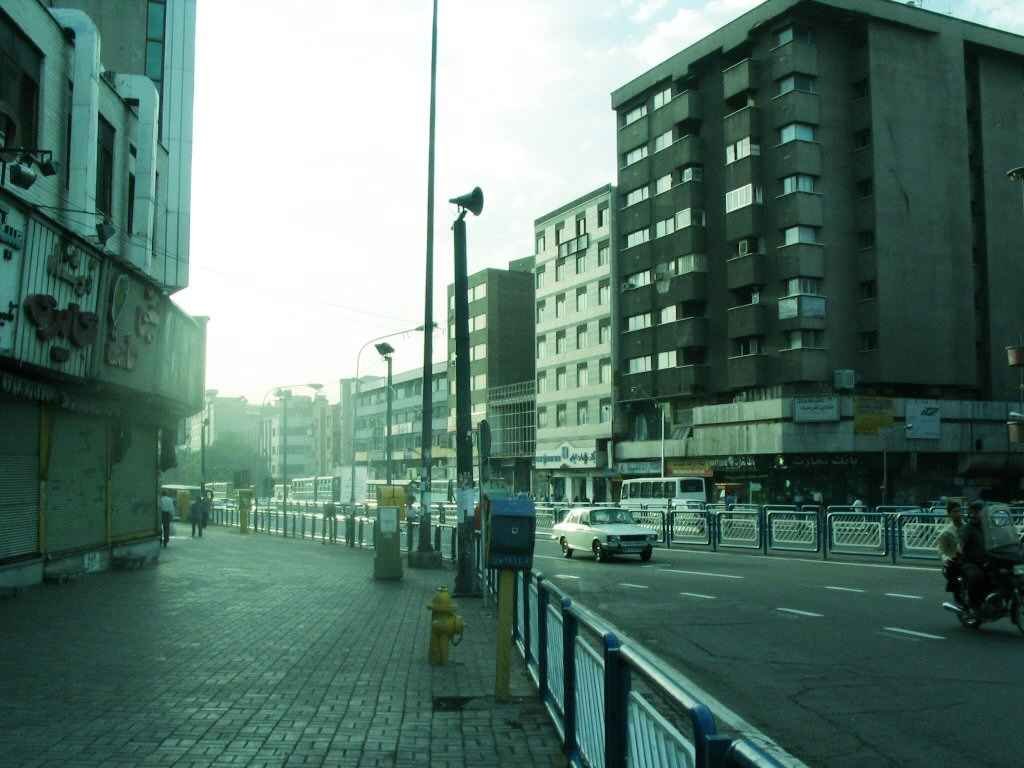
Mehran
The image is from Revolution Square, Tehran, it’s rare to see the sidewalk this empty. It’s one of the busiest areas in the capital of Iran. The start of many demonstrations and government protests including The Green Movement, 2018 protests, 2019 (Aban98), and 2022, Woman-Life-Freedom and TODAY.
Not all names carry meaning, but most Persian names do. Mehr is one of the richest words in Farsi. It means love, affection, also light and sun. With the suffix “-an” — Farsi for “from” — the name can mean the one who embodies love, or full of light and affection, belonging to Mehr.
I have a cousin with the same name, but when I hear Mehran, I think of him. My music teacher, who died young.
I was twelve, maybe even younger. I remember when the idea came up to change my music teacher — to someone who didn’t live within walking distance, someone I had to take public transit to see, all the way to downtown Tehran — I freaked out. I wasn’t confident enough to get to that part of the city, which in my mind felt sketchy. My parents, on the other hand, wanted me to take more risks, to be more independent, and they pushed me to go.
The first day was the scariest. I wasn’t only worried about the commute, but about meeting my new teacher. I had seen him before, at my parents’ gatherings when music was involved, but I had never spoken to him. My only memory of him was his dark beard and his pitch-black eyes.
The commute was not as bad as I had imagined. I needed to take the right bus, the one that would take me all the way to one of the oldest squares in Tehran. The translation of its name was Revolution Square, its history tied to the 1978 revolution. When that change happened, and the lives of Iranian people were disrupted, I was only one. I had no memories from then.
What I knew was that I was growing up in a different society, one where I had to cover my hair in public, even as a teenage girl. In my imagination, the girl I was back then didn’t feel like me. I was living a parallel life in my mind — the one where the tall, free girl inside me looked more like my mother, with her effortless fashion and long, loose hair falling over her shoulders, when she was studying in the U.S.
My memory of arriving at the stop — a ten-minute walk from the teacher’s place — is mostly filled with the smell of gasoline from buses, cars, motorcycles, and the grey, hazy sky of Tehran. The walk was short. I had written the name of the street on a small piece of paper and kept it in my hand. By the time I reached the intersection, I could barely read it; the text had blurred from the sweat in my palm, I could only see 12, the house number. I was nervous. It was my first time meeting a young man alone. The building was Tehran modern-era architecture from the 40s, three levels and a basement connected by an interior stair.
I pressed the top buzzer, the one my mom had told me about twice, emphasizing that he lived with his mother and that I needed to buzz the top one. No one answered. Then the door opened with a loud click. I went in and started climbing the stairs. I knew the way. The building was exactly like my grandfather’s place, where I used to rush up the stairs to reach my favorite cousin’s attic-style room on the top floor.
The first greeting and class are a blur. I only remember how comfortable he made me feel, right away. There was something about his extremely good-looking face — something he couldn’t even hide under that beard — that made everyone around him feel at ease. After a month of weekly classes, I understood why my parents had chosen him. He made music classes fun. We even danced together! We listened to world music, indigenous cultures, music from rural parts of Iran, and tribes from all over the world, including Africa. I now know why my Spotify is full of Ya-Ya music. It was his influence — one that, unfortunately, didn’t last long.
I don’t remember how long I went to his room for music classes, but I remember the walls, full of books and music cassettes. Posters of famous musicians hung above them. A room full of life. A dark Persian carpet covered the floor, where we sat for our one-hour lessons. I don’t remember the day the classes stopped, but I remember the day at the kitchen counter, where my mom and dad, along with their close friend — the one who had connected us to Mehran — shared the news of his passing in a car accident.
I didn’t know him or his backstories. I was just a kid who went to his music classes for a short time, but somehow those dark eyes, his charm and laughter, his love for music and dance, and his complex relationship with his mother stayed with me. Digging into my childhood memories, as I fine-tune the character of my debut novella, I see traces of him in my work. Mehran didn’t live a long life, but his legacy — his deep touch on people’s lives — is resurfacing decades later, quietly, in fiction.
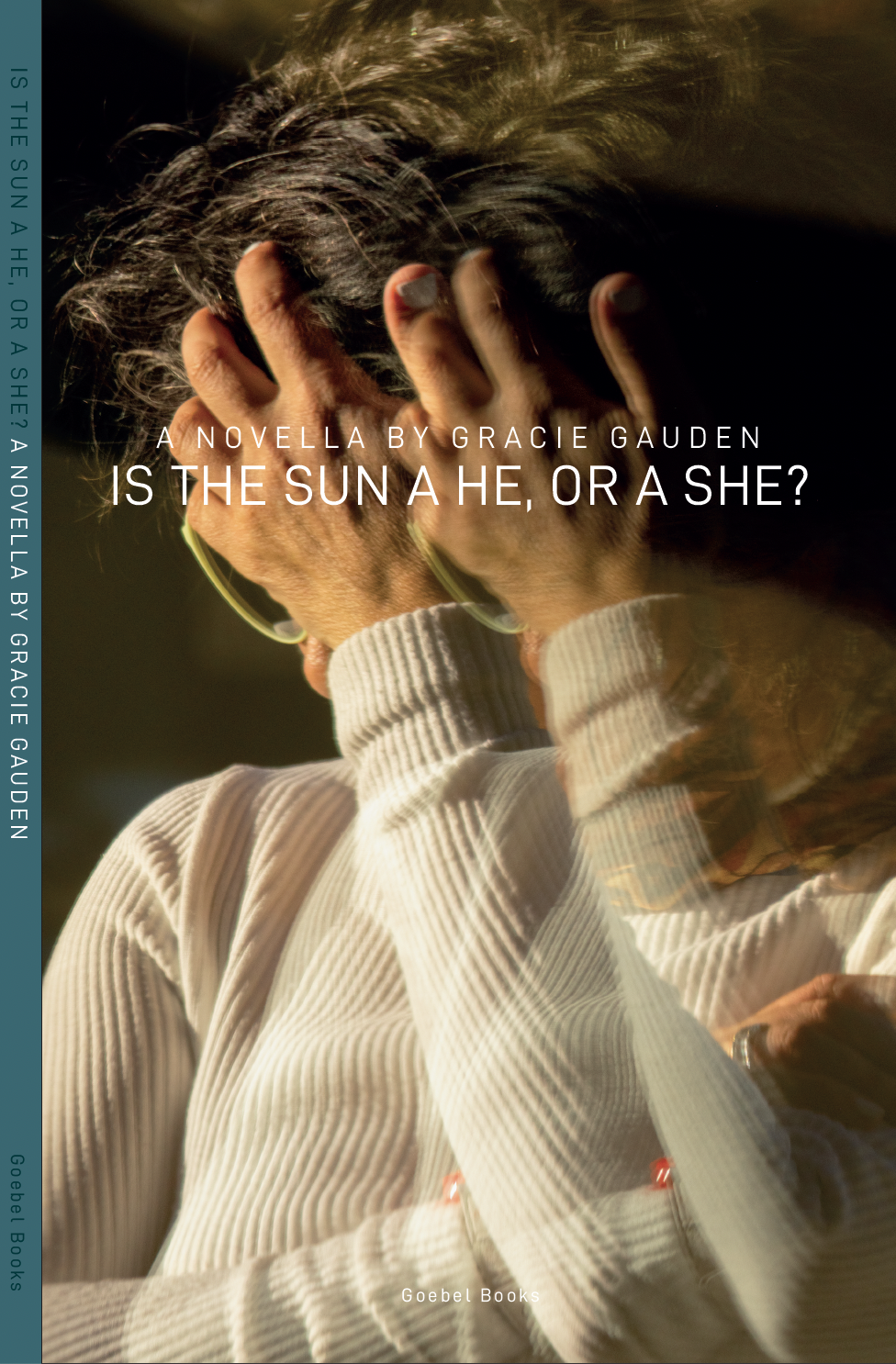
The Kick Off
The cover sketch is from talented Majid Abbasi, our senior graphic designer and the photograph by Nima Chaichi.
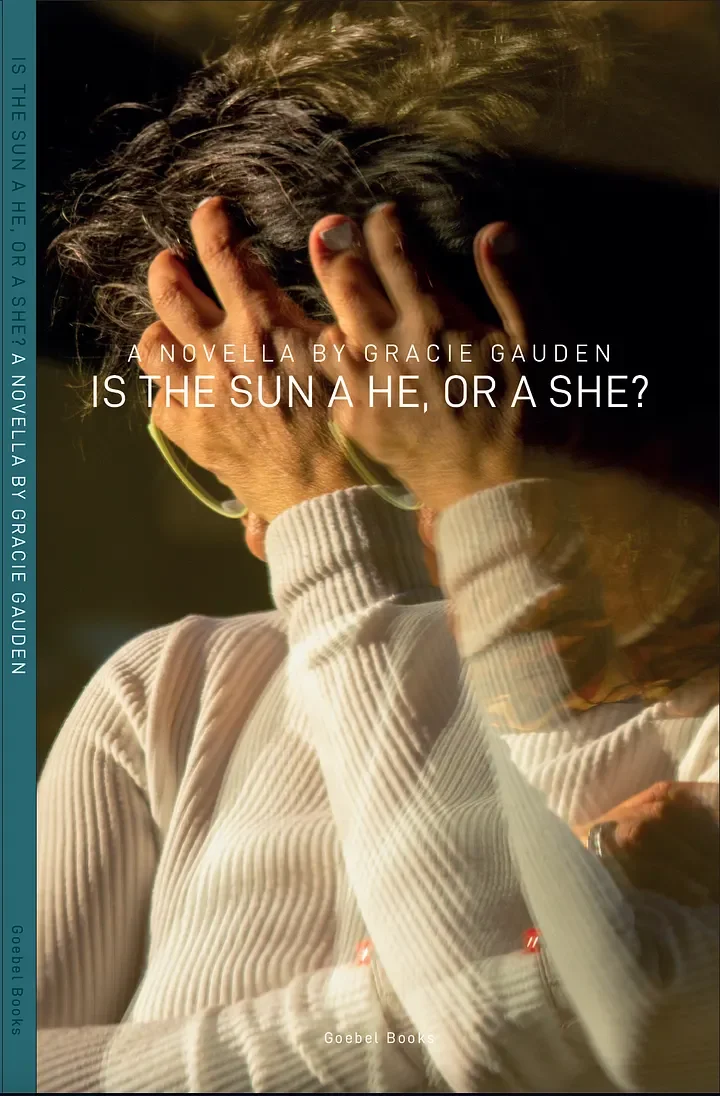
The cover sketch is from talented Majid Abbasi, our senior graphic designer and the photograph by Nima Chaichi.
Two years ago, on this same day, I broke my ankle skiing. It was a normal accident, but it felt different. The moment I fell, I had the sensation of being shot from the slope. I got dizzy, and the dizziness stayed — long after the surgery, long after the three months of rest. It felt as if nature had placed me somewhere on purpose, insisting I pause and listen.
That something began on January 7, 2024: a strong, almost urgent desire to write. I had written before — as a teenager, every day, in Farsi — never publishing anything. But this time was different. I could see the story clearly: the plot, the movement, the emotional architecture. I knew what it was about. I knew why I was writing it. What I didn’t know was that it would become something essential — something I would leave behind.
For the first six months, the characters were papery. I knew them, but I wasn’t inside them. Then, with my editor, we began carving away the fat, cutting deeper, until we reached the muscle. That’s when I entered them — him, her — fully.
Two years in, after hundreds of drafts, I’m ready to send it into the world. It’s not a masterpiece. How could it be? It’s my first. I believe in professionalism: that a strong idea alone is never enough, that without mastery of craft, nothing lasting is born. I’ve only just begun learning the craft of language.
This is the kickoff.
Much like my approach to business, I like to learn from every project and look at the full picture, and take the right steps — not in a rush, but with strategic, steady progress. So when I decided to self-publish, for personal reasons, I began by studying the roadmap: marketing, positioning, and the launch process as a whole.
The first step was building a writer profile. I am an architect and a business owner; no one knows me as a fiction writer. I chose Medium as my starting point and set a simple rule for myself: publish something every week. I did — and I’m loving it. The practice has given me the confidence I need to let the book meet the world.
The next step is building my online platforms, which I plan to focus on over the next 90 days.
The book itself is ready. I’m deliberately stopping myself from touching it again. After two years, I know I’ve grown as a writer, and if I revisit the manuscript now, it will no longer be the original — no longer the debut it was meant to be.
When exactly it will launch and land in your hands, I’m not yet sure. But I know this much: it will happen this year. So watch for a romance novella with this title in the coming months:
Is the Sun a He, or a She?
Generation, … What?
So tell me — what generation are you?
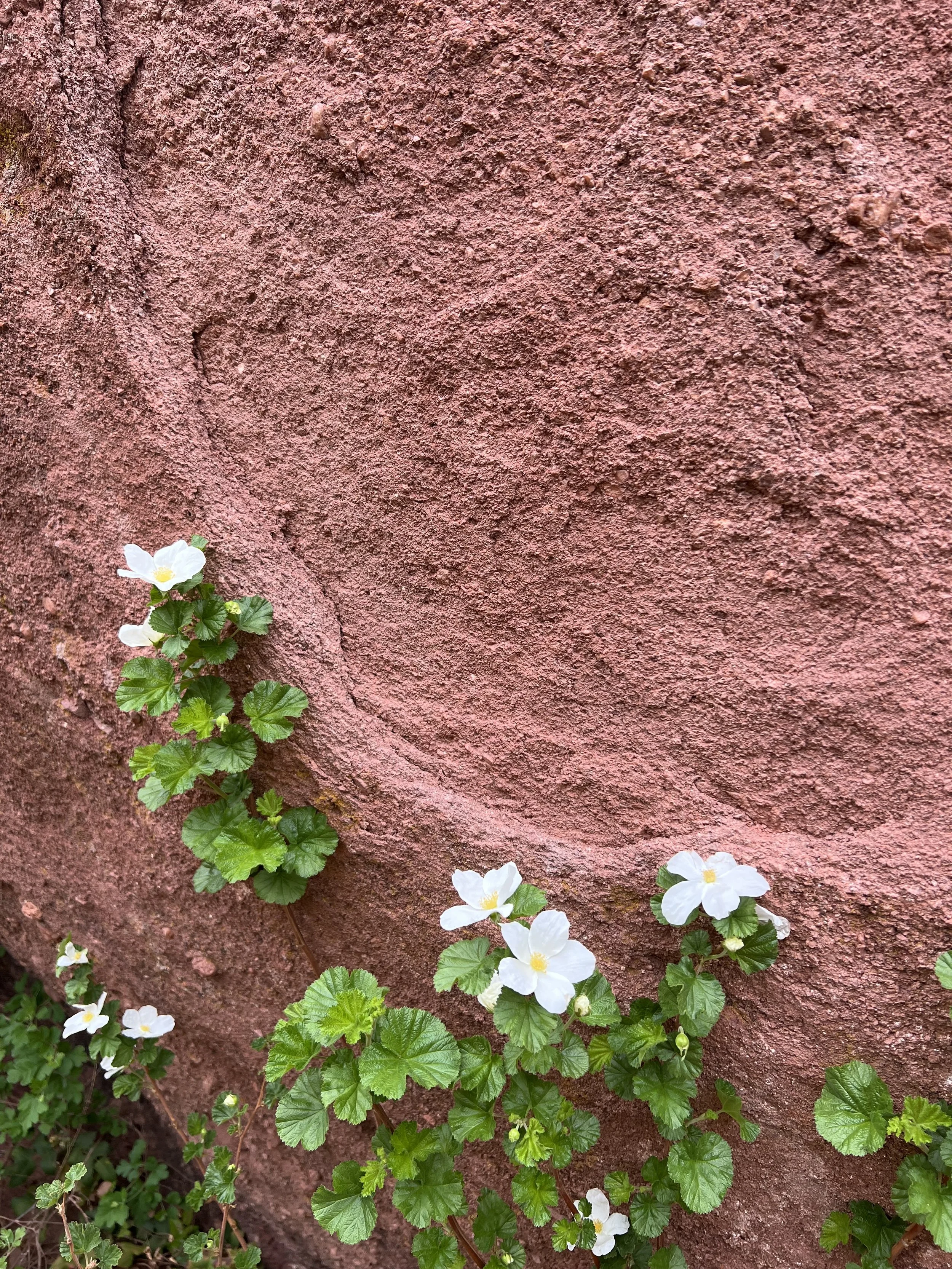
The red rock? Or the white flower?
I was in Denver for a conference. Being a mountain girl, I squeezed in a hike early one morning at Red Rocks, Colorado. I shared the idea with a few fellow nature lovers in our cohort. Three signed up. We took an Uber from our hotel downtown and made it to the mountains just after sunrise.
I’ve always dreamed of hiking in Colorado, but I never thought it would happen during a conference trip packed with business meetings.
First, we visited the Red Rocks Amphitheatre — extraordinary. The way the built form blended with nature was so thoughtful, so harmonized. I loved the space so much, I was almost tempted to skip the fancy business dinners and get a ticket for the DJ concert happening there that night.
We climbed the amphitheater stairs under the soft light of sunrise. We were lucky — it was spring, and the fresh greens set off the red rocks in a way I’d never seen before. Majestic doesn’t quite capture it, but I can’t think of a better word.
But the real magic began when we left the amphitheater behind and hit the real trails. Red rock, red sand beneath our feet, the scent of wild thyme, the soft sound of trickling springs, wildflowers dancing along the edges. We walked in silence, the four of us — mesmerized.
At one point, the trail wound around a large boulder. I stopped to look at a small white flower clinging to the rock. I leaned in close — my face nearly touching it. The scent took me straight back to my grandmother’s place in Tehran.
Behind the flower was that same red stone. I touched the petal — soft, fragile. Then I touched the rock — rough, hardened by centuries of wind and heat. I could feel the tension in it, the weight of time. Later, in my hotel room, I looked it up: the rocks at Red Rocks are over 300 million years old. They were separated from the Rockies themselves. The flower, on the other hand, might live for a week. Maybe two.
I thought back to our family conversation we had in the car earlier that week with my husband and daughter, debating generation names — Millennials, Gen Z, Alpha… what’s next? When did we start naming generations? Why do we feel the need to separate ourselves into such small, rigid time boxes? Forty years apart, if that.
I wonder — what would the generation name of the Red Rocks be, compared to the white flower?
Just think for a moment, nature doesn’t bother naming generations. It will be too much work. What I saw that morning was a harmony of lifespans — beings from different ages coexisting, teaching, nourishing one another.
The 300 million years old rock needs the young white flower, the same as the other way. That’s what is called harmony. No textbook will teach us this, only nature.
So tell me — what generation are you?
The red rock? Or the white flower?
Hey, I’m Gracie. I’m working on my debut novella, Is the sun a he or a she? a romance.
Amor Fati
Tell yourself if you wake up and nothing really hurts, that’s the best day of your life.
Amor Fati is a Latin phrase that translates to “love of fate.”
It’s a philosophical idea most closely tied to Friedrich Nietzsche, though it traces back to Stoic thought. At its core, it’s about embracing life fully — not just accepting what happens (good or bad), but loving it as something necessary and meaningful.
I had a cousin who was a year older than me. She was diagnosed with terminal cancer when she was young and died before finishing high school. I always remember her as cheerful and kind, the type of person who left you lighter and more graceful after spending time with her. She once told me, with that sweet smile in her voice:
“The days that I wake up and nothing hurts are the best days of my life.”
I don’t know what luck really means. But I do believe that life, as a journey, brings some things you can design and plan — and others simply hit. For me, having good parents was not a choice, but having a good partner in life was. Being born a year after the Islamic Revolution in Iran and growing up under the pressure of a religious dictatorship was not my choice, but immigrating to Canada was. My cousin’s cancer was not in her control, but moving through her short life with adversity and positivity — that was her choice.
Some things are in your control, some things are not. The wisdom lies in focusing on what you can control and accepting the rest. Stoic philosophy has been around for more than 2,500 years, yet many of us — I’d say most of us — still struggle to accept our lives.
Recently I joined a group focused on career growth and learning the business side of things. I’m an architect and a designer; I never went to business school, and I’ve had little exposure to topics like finance, accounting, or business. As my business is growing I need to learn how to run our company. In this small cohort, we have a chair who facilitates the meetings. For our first session, she asked each of us to bring a memento — any object with a story — so we could get to know each other better. Among her own mementos, she showed us a coin with the words Amor Fati carved into its center.
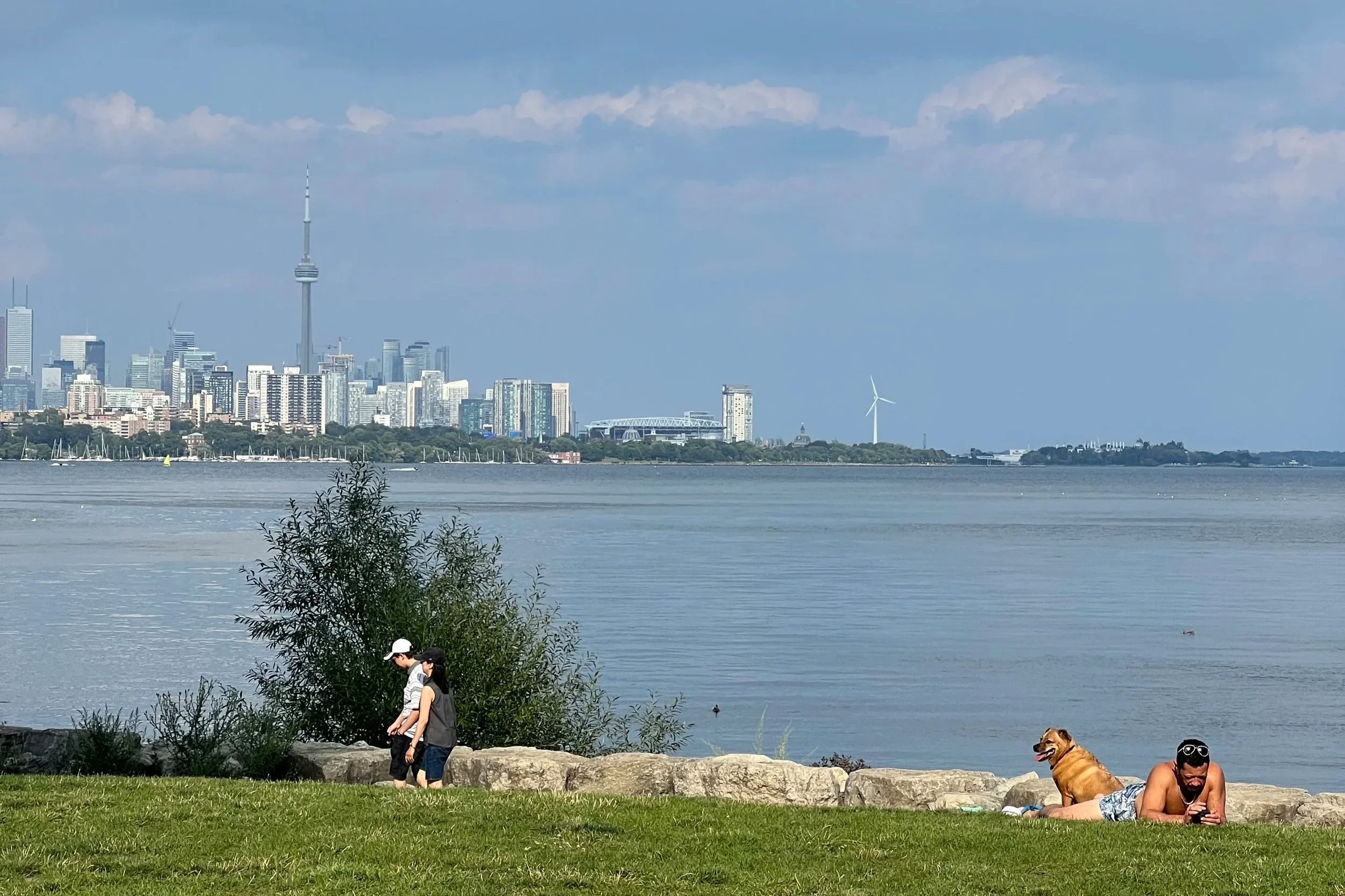
After the meeting, I started walking along the Toronto waterfront trail. I watched the people around me, catching eyes as they passed — some running, some biking, some walking their strollers of their dogs. I found myself guessing who might be approaching life the way I do, and thinking of my own circle of friends and family. It felt easy to tell who belonged to the gang of Amor Fati, and who didn’t.
I remembered the phrase carved on the back of the coin: “Not merely to bear what’s necessary, but to love it.” As I watched everyone passing by, I reflected. That simple phrase holds so much if we think deeply — if we map our sorrows and struggles onto it, and imagine what it would mean not just to bear them but to love them. It’s not easy. Yet, as a natural positivist and a true believer of the school of Amor Fati, when I think about my own journey and compare it with my cousin’s, I realize I can always do better.
Tell yourself if you wake up and nothing really hurts, that’s the best day of your life. That’s what we should all be doing or at least try!

There is so much life in everyone eyes, until there isn’t.
Now, I see you too.
I woke him up at midnight. He was having a nightmare again. I nudged him first, trying to wake him gently. He didn’t. As his breath shortened and he squeezed his eyes tight, as if he was in real pain, I put my hands on his shoulders and shook him — this time, firm. He shot his eyes wide open, his face damp with sweat, still breathing hard. I had never seen him like that.
“Hon, you were dreaming.” He pressed my hand — the one on his right shoulder — hard. In the dark, he stared at me as if he couldn’t register who I was. There was an emptiness in his eyes. Something in his expression scared me, so much that I shook from the inside. I gathered myself, louder this time, with more confidence.
“Guido, you were dreaming.”
I didn’t want to show a trace of my fear. Deep inside, the thought haunted me. What was causing my lover to have nightmares, sometimes twice a week? He would wake up in the morning with no interest in talking about them. I asked him once, while he was sipping his coffee, leaning on the kitchen counter, what these dreams were about. He looked at me as if I was saying something crazy.
“What dreams?”
The morning after, early at six, I go to the library to study. It’s a Friday, and we usually make our weekend plans before then. This time we didn’t, and I want to know if we’re getting together with any friends. In the campus corridor, I use the public telephone to call our landline. The phone rings through more than ten long beeps before he picks up. His voice is groggy, and he tells me he’s not in the mood for anything social.
I pause, wanting to ask what’s going on, but I don’t want to have this conversation over the phone. We’ve only been dating eight months, and I know there’s still so much about him I don’t know at all. In the bare silence between us, he asks,
“Do you know where Honfleur is?”
“No.”
“It’s about three hours north of Paris. I’m thinking we go there for the weekend.”
When I get to the studio, he shares more, telling me the place we can stay is his grandmother’s house, now rented to an older couple who were her friends. The attic — where he and his brother slept during their summer vacations — is still exactly as it was twenty years ago, and we can stay there.
Saturday morning, we hit the road early with our rented car. We stop for lunch in a city called Vernon. As part of the Normandy region, I learn that the four C’s are what we should cherish: cream, camembert, cider, and calvados. The latter is what he’s having now. The late-summer sun reflects on the mahogany-colored drink inside the crystal glass.
“Traditionally, people would have a shot between heavy meals to make a hole, to eat more.”
He downs the shot and cuts a small triangular piece of camembert. I watch him in his white cotton t-shirt, he looks good. How relaxed and cheerful he is now. His eyes — those restless dark holes that could undress a moment — are shining now, last night they were…don’t know what. They were gone somewhere far away.
What he said lingers in my mind: the calvados making a hole so you can take in more. His eyes do the same to me — they make a hole inside me, a space to live more. I keep looking at him. He’s eating, and when he eats he’s fully concentrated; he barely talks.
I remember the first time he cooked for my Persian friends, and when everyone left, as we were going to bed, he was so angry — for one simple reason: he was complaining that they talked so much they didn’t even appreciate the food. I didn’t reply; I smiled.
The stairs to the attic on the top floor are narrow. The wooden steps squeak under our weight as we climb. The attic room is separated from the staircase by a door that isn’t tall enough to pass through without bending — even for me. Imagine Guido, with the height he has.
Inside, there’s a small queen bed with quilted beige bedding, a tiny window on the only straight wall overlooking the sea, and an ornamented cabinet leaning against the wall at my shoulder height. The walls are painted a dusty pink, and small framed French Baroque paintings hang all around the room. Everything has the warmth of a grandmother’s house: tidy and clean, with the faint smell of old-school body cream lingering in the air.
I sit on the bed and check the frame resting on the nightstand. Two small golden frames connected at the hinge, folded open to stand. Inside, two black-and-white portraits of young boys. I pick it up and angle it toward the light. It’s not difficult to recognize him and his brother; his eyes stare at me through the aged stain of the glass. Softer. Tranquille, like the sea was today.
“So cute,” I say.
He looks over my shoulder. “Shit, my hair — what the hell were they thinking, giving bangs to a boy?”
“It looks good on you.”
“I look like a watermelon.”
I laugh out loud. “Watermelon?”
I remember I meant to cut some for the beach and forgot. It’s still hot, and a cold bite of watermelon after swimming is fun. After a nap, he change into his speedo swimsuit, a towel around his neck, packing snacks. I change and tuck the wine bottle and the baguette we bought from the corner bakery into my striped, white-navy beach tote.
We descend the stairs, passing the entrance door on the ground floor. The bell beside it catches my attention. It’s golden, with a circular frame in British green. It feels medieval.
Later, he tells me Honfleur is a medieval city. We walk toward the beach, it’s only five minutes’ walk. We need to pass the street his grandmother house is in, Ave du Littoral and take a windy path between trees to the beach. I ponder on the street name, du Littotal means of the shore. It’s a coincidence that in French littoral and English literal look similar.
When we arrive at the beach, I’m surprised not to be able to see the water. The vast shore seems to have taken over the sea bed; on the horizon I can see a blue line, maybe kilometres away. I’m sure when we arrived, before our nap, it was much closer. We settle at the bottom of the quay walls. I put my bag down on the sand, which feels more like a mudflat.
“Wow! Where did the water go?”
“Honfleur, It’s known for intense tides.”
He showed me, as we were driving through the city, the channels of the Seine connected to the sea and told me that beyond the sea bed, the narrow channels at the mouth of the Seine, plus the geographic shape of the land, create one of the most dramatic tidal currents in the world — sometimes between two and seven metres in a single day.
We walk toward the water but halfway we give up; the mud is not pleasant to walk on, and it looks like we’d need at least half an hour to reach the sea. We might miss the sunset by the time we get back to our spot. Instead, we open the bottle and lie down on our beach mat. No glasses — we drink straight from the bottle and tear the baguette with our hands. After the first bite, while I’m still chewing, he starts kissing my lips. One hand in my hair, the other holding my head with force. I need to breathe and swallow the bread; I pull away for a second and take a quick sip from the bottle so I can chew faster.
“Take this stupid thing off.”
He means the top of my bikini. He wants me to feel comfortable being topless in public. I’m still working on it. This time, I open the clasp at the back and drop the red top on the mat. I lie down as he bends toward me, this time kissing me on my neck.
I think of the combination: lying on a Normandy coast, topless, a bottle of wine in my hand, while a man kisses me on the lips. I imagine my grandmother for a moment — the contrast of her life and mine. Only two generations apart, and she never touched another man besides her husband, from the age of sixteen. His voice brings me back.
“Promise you don’t die before me.”
As always, I can never predict where his mind goes. Why talk about dying under such a beautiful sunset, when we are half-naked, kissing beneath a sky painted in magical hues of orange and blue?
I take my time, staring at the sky. Registering what he just said.
Then I realize: it means he thinks he will die sooner.
I can’t imagine that. I turn to face him, touching his spiky stubbles on his cheeks, moving my point finger between his chin and the start of the softer skin, we hold our gaze, his stare is intense and wild. The tag line of a movie I watched recently comes to my mind as much as I don’t want it. There is so much life in everyone eyes, until there isn’t. I whisper.
“No promises.”
The night ends with more calvados, drinking with his grandmother’s friends as they tell stories from when they were young, travelling the world. I never imagined I could get so drunk with eighty-year-olds. How do French people drink this much at that age? When we go back up to the attic, we are completely toasted. Before closing his eyes, he says, almost matter-of-fact, that his recurring nightmare is losing his entire family in a war, buried under the debris of destroyed buildings.
“Now, I see you too.”